
EV Charging Cables
EV owners need durable, properly rated charging cables that deliver power safely and reliably, yet selecting correct connector types and current specifications often confuses buyers facing multiple international standards. KOLANKY EV Charging Cables feature Type 1 and Type 2 connectors with industrial-grade construction and adjustable-current compatibility, engineered for single-phase and three-phase delivery across home, workplace and travel applications. Browse the official store and order at the best price today to find the cable length and rated current that matches your vehicle and charging equipment.


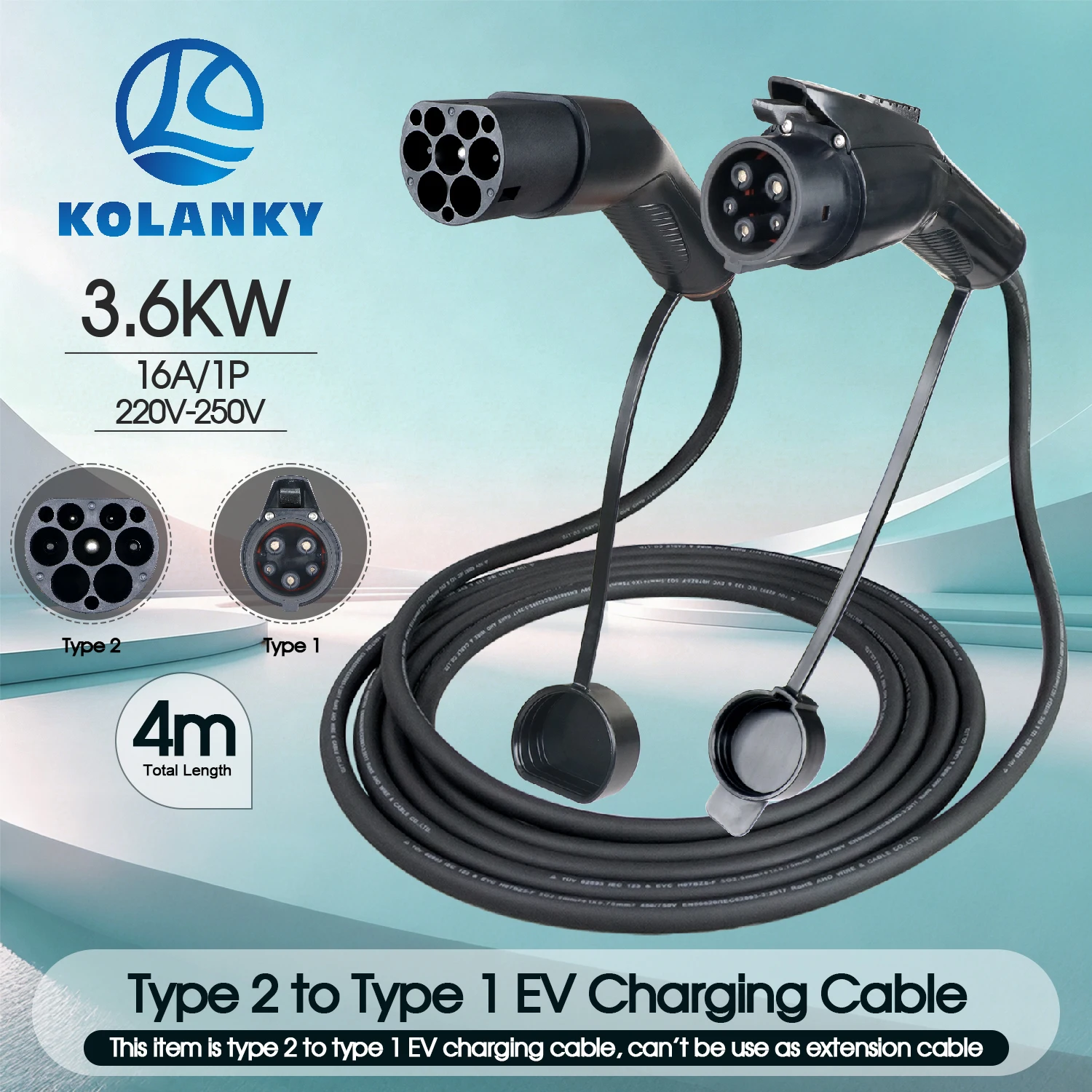


KOLANKY EV Charging Cables with Type 1 and Type 2 Connectors
KOLANKY EV Charging Cables deliver flexible power delivery solutions for battery electric vehicles and plug-in hybrid cars through comprehensive support for Type 1 SAE J1772 connectors widely used in North America and Type 2 IEC 62196-2 standards prevalent throughout Europe and international markets. The cable lineup spans multiple lengths from 7.5 meters to 11 meters, accommodating different parking distances between vehicles and wall-mounted chargers while maintaining voltage stability over extended runs. Industrial-grade copper conductors with cross-sectional ratings up to 16 square millimeters ensure cables handle rated currents between 10 and 32 amperes without voltage drop or thermal stress during extended charging sessions. Single-phase configurations deliver currents up to 16 amperes while three-phase capable cables support the full 32 ampere range, covering both residential home charging and fast commercial applications. KOLANKY EV Charging Cables integrate adjustable-current technology through intelligent communication connectors that allow compatible EVSE units to optimize power delivery based on vehicle onboard charger specifications and available electrical capacity. Durable TPE outer jackets resist UV degradation, moisture penetration and mechanical abrasion that damage standard PVC cables within 2-3 seasons of outdoor exposure. Superior cable construction from KOLANKY means your investment in charging infrastructure delivers years of reliable, safe operation.
Industrial Connectors and Electrical Safety in Cable Construction
Type 1 SAE J1772 connectors incorporate spring-loaded contacts and mechanical locking sleeves that prevent accidental disconnection while delivering rated currents safely through five power pin configurations. Type 2 IEC 62196-2 connectors feature seven contact pins arranged in a protective recessed cavity that shields against weather exposure and accidental contact, meeting stringent requirements for public charging networks across the European Union. Industrial-grade construction means every KOLANKY cable includes earth leakage detection circuits that interrupt charging within 300 milliseconds if moisture enters the connector interface, preventing electric shock and equipment damage. The rated current capacity of each cable appears clearly on the connector label and cable jacket, with color-coded markings that help technicians verify compatibility before installation in permanent charging stations. Copper contact pins receive protective nickel plating that resists corrosion even when exposed to coastal salt spray or humid tropical climates that oxidize inferior materials. Reinforced strain relief boots at both connector ends prevent internal conductor breaks caused by repeated bending or sharp pulling forces during parking lot charging sessions. Overvoltage suppression components within intelligent connectors protect vehicle onboard charger electronics from transient power surges common in older electrical grids.
KOLANKY EV Charging Cables Outperform Standard Cable Offerings
Basic charging cables lack adjustable-current capability, forcing users to manually adjust EVSE settings or risk slow charging on vehicles with lower onboard charger ratings, whereas KOLANKY cables communicate power parameters automatically to prevent this inefficiency. Industrial connector grades employed in KOLANKY cables withstand 10,000 connection cycles before contact degradation occurs, compared to consumer-grade alternatives that show increased resistance after 1,000 cycles and risk fire hazard within 3-5 years. Standard PVC cable jackets become brittle and crack within two seasons when exposed to direct sunlight, while KOLANKY TPE outer jackets maintain flexibility and protective properties even after 10 years of continuous outdoor installation. Longer cable lengths from 11 meters reduce the need for expensive electrical panel relocations or additional circuit installations because vehicles can park farther from charging equipment without voltage losses that compromise charging speed. The Type 2 IEC 62196-2 connectors found on KOLANKY cables exceed public charging network requirements in Europe and Asia, ensuring cross-compatibility with rental vehicles and traveling electric cars without adapter complications. Fleet operators eliminate cable inventory complexity when standardizing on KOLANKY products because comprehensive ratings documentation and color-coded systems simplify proper cable assignment to different vehicles and charging locations. Best-in-class durability and safety certifications make KOLANKY cables the trusted choice.
Choosing Cable Length, Connector Type and Rated Current
Measure the distance between your parking location and the wall-mounted charger or EVSE unit to determine required cable length, keeping in mind that 7.5 meter cables serve compact residential garages while 11 meter lengths accommodate larger driveways and commercial parking layouts. Verify your vehicle’s connector type by consulting the owner manual or examining the vehicle’s charge port: North American-market vehicles typically use Type 1 SAE J1772 connectors while European and many Asian models feature Type 2 IEC 62196-2 inlets. Match the cable’s rated current to your vehicle’s onboard charger specification and available electrical circuit capacity, with 16 ampere cables suitable for standard home 32 amp circuits and 32 ampere cables required for dedicated three-phase installations. Single-phase residential installations deliver charging through two current-carrying conductors plus earth, while three-phase cables include three current-carrying conductors enabling faster power transfer at the same rated amperage. Industrial connector grades apply when cables will experience frequent connection cycles or outdoor weather exposure exceeding three seasons, protecting your investment against premature failure. TPE jacket material proves essential in coastal, tropical or high-UV environments where PVC alternatives degrade rapidly and become fire hazards. Order from the official store today and get expert guidance on cable specifications, fastest shipping and the best available price backed by complete manufacturer warranty coverage.